Morocco's Ties with US and Spain Raise Questions Over Ceuta Border Surge
+AI Analysis - Key Points
- 01
Morocco's monarch named a $1bn highway after Donald Trump, deepening ties with the US
- 02
Spain's rapprochement with Algeria may have contributed to the surge, but the US is also a possible factor
- 03
Morocco's relationship with the Trump administration may have influenced its response to online rumours about the Spanish border
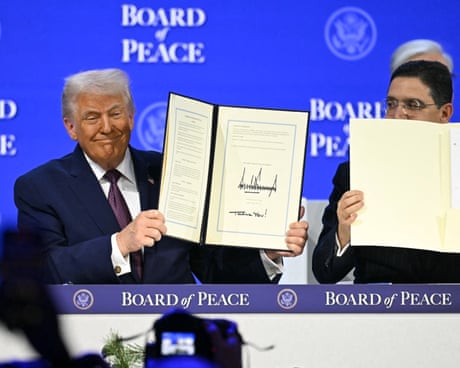
The cosy relationship between Washington and Rabat has long been flaunted by both sides. Morocco's announcement this year that it would be the first African state to join Donald Trump's Board of Peace was just one example, as was the congratulatory message recently sent by Trump to mark King Mohammed VI's 27 years in power. The latest example landed this week, as Spain grappled with the aftermath of the sudden influx – and swift return – of more than 70,000 people into Ceuta, Morocco's monarch confirmed he had named a $1bn highway flanking the disputed territory of Western Sahara after Trump. The deepening ties have come under renewed scrutiny as questions continue to swirl over what exactly led to the deadly mass border crossing into the tiny Spanish territory in north Africa. Observers have suggested Spain's recent rapprochement with Rabat's archrival, Algeria, could have set off Morocco. But another, perhaps more plausible explanation pointed towards the US, said Riccardo Fabiani, the north Africa project director for the International Crisis Group. "It's obviously impossible to demonstrate," he said. "But in terms of plausibility, I don't think it's impossible to imagine that Morocco might have done something to earn brownie points with its allies, given that Morocco and this particular administration in Washington do have a very close, excellent relationship." While Morocco had probably not "masterminded" the surge into Ceuta, he said, its relationship with the Trump administration – along with the Moroccan king's desire to keep its claim to Ceuta in the spotlight – may have affected how it responded to fast-spreading online rumours about the Spanish border being thrown open. "For sure the Moroccan security forces were monitoring those conversations," said Fabiani. "They saw that and there was probably some conversation where they decided to do nothing and see where this goes." What followed made headlines across the globe as tens of thousands of people swam or waded across one of the EU's two land borders with Africa. As Spain scrambled to respond, the incident raised questions over the role of Morocco's close relationship with the US in the surge. The incident has sparked renewed scrutiny of the ties between Morocco and the US, as well as the impact of these ties on regional dynamics. The incident has also highlighted the need for greater cooperation between Spain, Morocco, and other regional actors to address the root causes of migration and prevent similar incidents in the future.
The incident has also raised questions over the role of social media in spreading misinformation and influencing migration patterns. The incident has sparked a wider debate over the impact of social media on regional dynamics and the need for greater regulation to prevent the spread of misinformation.
The incident has also highlighted the need for greater cooperation between Spain, Morocco, and other regional actors to address the root causes of migration and prevent similar incidents in the future.
VideoVideo Coverage
Morocco's Ties with US and Spain Raise Questions Over Ceuta Border Surge
Watch video coverage on YouTube
Opens relevant video results on YouTube.